
{主关键词}
满城尽带黄金甲
双台风影响中国 多地现强降雨_我的网站

A | 中新社北京8月23日电 (记者 陈溯)记者23日从中国气象局获悉,受台风“紫檀”“简拉维”及西南季风影响,中国多地有强降雨。
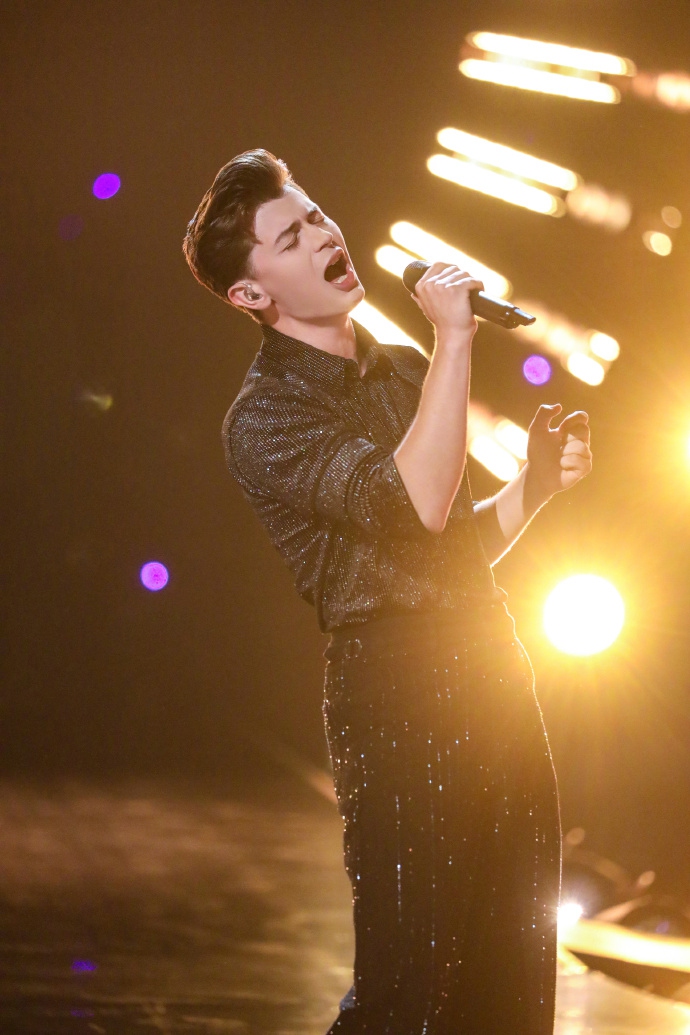
Elliot James Reay could have copied every other Western act and sung a Taylor Swift cover. Instead, he took 1950s rock'n'roll to a live TV show where autotune is switched off and discovered a version of fame that Britain has forgotten.
Elliot James Reay was traveling in the US, trying to finish a song, when his manager called. There was an invitation to join Singer 2026, a prime-time live music show in China. Reay didn't hesitate. He had traveled the world before he was a full-time musician, but had run out of money before reaching China. "I went everywhere but China," he said while sitting for an interview with the Global Times, sitting in the office of his label in Beijing, from which the Palace Museum can be seen not far away.
Reay is, in the West, a very 2020s kind of artist. He began posting short covers on short video platform TikTok in 2019; during the UK Covid lockdown, he chose to focus on growing his fan base. He now has millions of followers across platforms, and his debut single notched 10 million views before it was even released. In the British industry, this is both a leg-up and a trap. "You can have all the followers," he says, "but they don't guarantee people will buy tickets."
In China, that equation flipped.
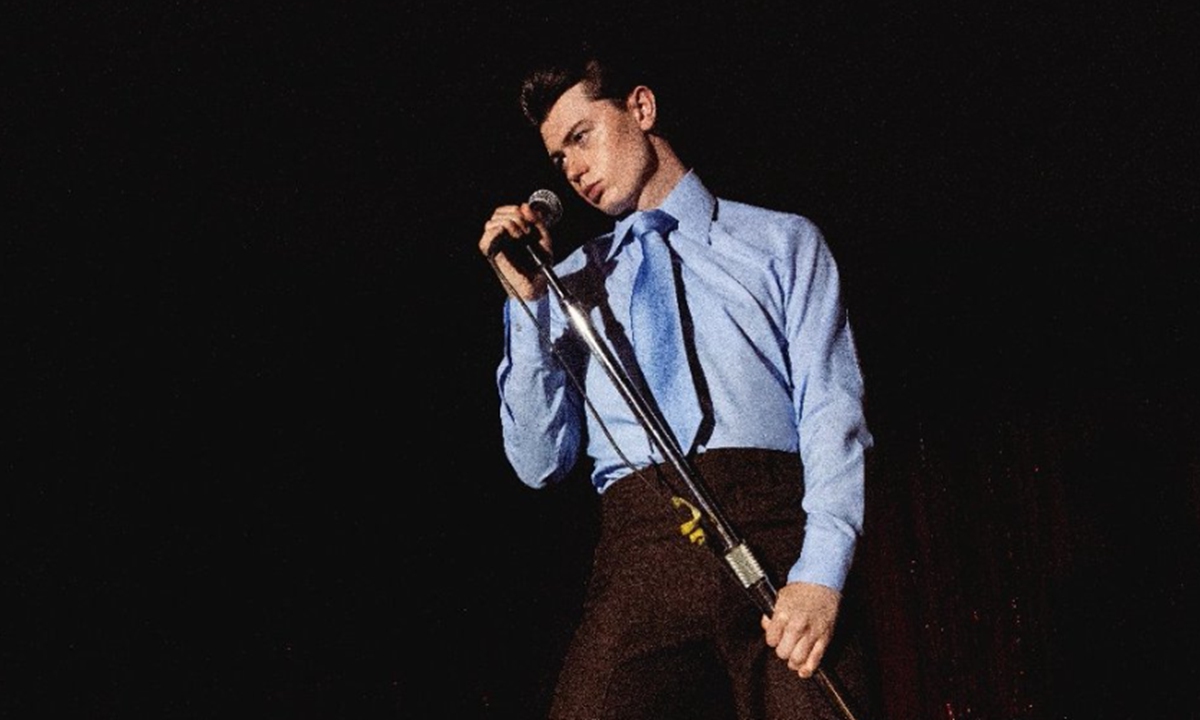
Nervous again
The Chinese show, Singer 2026 is broadcast completely live, with no pitch correction. For Reay, who had played enough small gigs to feel comfortable in his own skin, it was a shock. "I haven't felt nerves in a long time," he says. "But I've never been in a competition before. To have my singing judged against other people made me really nervous."
He watched Week One's performances from the wings and saw why. "The standard was terrifying," he says.
But the format, he admits, is something the UK no longer has: a televised singing contest that treats vocal ability as a public event, not a pre-packaged product. "It made me feel like I just started my career again."
Reay's lane is retro. Not as pastiche, but as lineage. He wears the silhouette of Elvis Presley, sings in the grain of 1950s pop, and writes songs that sound like they were cut from a Sun Records demo. He could have sanded it down for Chinese audiences, but he didn't.
"Someone has to start the wave before you can see it," he says. Among the songs he performed were "Unchained Melody" and his original track "I Think They Call This Love," which he co-wrote with his girlfriend. He points out that the Beatles still sit next to Taylor Swift on the radio, and that pop started in the 50s. "It's the foundations of pop," he says.
Learning to feel the words
In the final, Reay performed a bilingual version of the Chinese song "Hou Hui Wu Qi" (The End of the World). It was his first time singing in another language. He spent five days learning the Chinese lyrics, listening to the original on loop.
"There are sounds in Chinese we just don't have in English," he says. "I couldn't hear the difference at first. I'd say it, and Helen (his translator) would say, 'No.' I thought I was saying the same thing." Eventually, he stopped trying to hear it and started trying to feel it. "It became more about how it felt to say it. How I place my tongue in my mouth," he says.
He didn't understand the meaning until day three. "Helen gave me a card with the Chinese characters and the English translation. It's very poetic," he says. The performance received a strong reaction, with it being called an attempt at "cultural fusion."
He had saved his own original, "I Think They Call This Love," co-written with his girlfriend, for the same final. He had held the song back deliberately. "I knew that any week was my last week," he says, "but I knew that if I made it to the grand final that I had to do it then." He had no idea it would become the last song of the entire show.
When he finished, he walked straight off stage, took his girlfriend's hand, and the two of them left together, a moment that trended on Chinese social media that night.
The song is about the exact point they realized they were in love; it was also the first track of his career he fully believed in and pushed into the world. Having her there to watch it live, after weeks of her only seeing performances on a phone in a hotel room, "tied the whole thing in a bow at the end."
A touring musician, not a TikToker
Reay is open about the tension between his origin story and his ambition. "I don't want to be a TikTok celebrity," he says. "I'm a musician. I want to tour."
The platform gave him an audience, but it also boxed him in. He remembers friends who wrote incredible songs during lockdown, while he chose to build a fan base. Now, he says, some of those friends have had to stop writing and make TikTok videos instead.
China, he says, gave him permission to be both an online creator and a live performer. Universal Music, his label, didn't push him to chase trends. "They never said, 'Do this, do that,'" he says. "They supported what I wanted to sing, and then they made it the best version they could."
Before Reay, a string of international artists had already found warm receptions and career-shifting opportunities in China. Kazakhstani singer Dimash Kudaibergen, Malaysian star Shila Amzah, US country artist Mickey Guyton, British vocalist Jessie J, and French singer-songwriter Joyce Jonathan all won large Chinese audiences through high-profile television appearances and live performances, each using the platform to open a new chapter in their careers.
He's already planning a return. He wants to bring a tour. He wants to buy the traditional instruments he saw on set and take them home to England. "I'm going to learn how to play them," he says, "and maybe put them into my music."
The advice he'd give other Western artists looking East is to stay loyal to yourself. "Be yourself," he says. "It's very easy to want to change yourself to fit into a market, but at the end of the day, if you stay true to yourself, you'll be happy."
"In the UK, I felt like I needed to do other things to make other people happy," he says.
"If I hadn't stopped doing that, I wouldn't be sitting here. I wouldn't have done the show. My whole journey would be different," he says.
。

B | 中央气象台预计,今年第19号台风“紫檀”(热带风暴级)将先在北部湾海面回旋少动,23日傍晚起,将以每小时5至10公里的速度向东北转偏北方向移动,强度逐渐加强,最强可达强热带风暴级,并逐渐向广西沿海至广东雷州半岛西侧一带沿海靠近。 另外,今年第20号台风“简拉维”(热带风暴级)的中心23日5时位于台湾省台北市东北方向大约115公里的东海南部海面上,预计“简拉维”将以每小时5至10公里的速度向西偏南方向移动,强度逐渐减弱,将于24日在台湾海峡减弱消散。 中央气象台8月23日6时继续发布台风蓝色预警。 23日至25日,预计受台风“紫檀”及“简拉维”影响,海南岛西部、广西南部、广东中东部和南部、福建、台湾岛、浙江东部和南部等地部分地区有大到暴雨,局地大暴雨到特大暴雨。此外,四川盆地西南部、湖南、江西、云南等地多分散性强降水。 23日至24日,西北地区东部、内蒙古中东部、华北、东北地区等地多阵雨或雷阵雨,局地有暴雨或大暴雨,并伴有短时强降水、雷暴大风或冰雹等强对流天气。25日至28日,北方地区自西向东还将出现一次降水过程,部分地区有大雨到暴雨。(完) 【编辑:王琴】。

C |
Current article:http://sui65.qingfanceliangsangniang.cfd/news/20260826_7118.html
Published on:13:21:19
- 218钱塘(新)区蝉联省级投资“赛马”激励
- 4625177小米产品总监:未来小米8不会有这么便宜的价格。
- 88460禁毒普法宣传进社区
- 7063093Memorial honors Triangle Shirtwaist fire deaths that galvanized labor movement
- 57635《泡泡龙》官宣登陆PS5等主机!童年回归 售价约33元
- 714很积极啊!希尔德半场2分1板 但正负值高达+15队内第二高
- 603Anthropic发力自研芯片,聘请前谷歌TPU负责人阿米尔·萨莱克
- 241066中国球员打NBA夏联为了啥
- 47457Turkish mine explosion kills 28
- 5861“十五五”时期中央财政将进一步聚焦基础研究、应用基础研究和国家战略科技任务,继续加大投入力度
- 564IPO前夕与高通对簿公堂 Arm为何要铤而走险?
- 899比“巴威”更大更强 台风“白海豚”连续两次在浙江登陆
- 23474The Second Part of Ranveer Singh's Dhurandhar to Release on THIS Date
- 4017167【园所动态】聚焦自主 共研户外自主游戏——户外自主游戏专题教研活动
- 3490255美记:鹈鹕仍是追求马瑟林最积极球队 但需腾空间
- 27002上海通报闵行区一单位发生火灾:火势已扑灭,无人员伤亡
- 442ModStartCMS v4.8.0 昵称功能增强,内容公式支持_模块_后台
- 4555举行“乡村振兴·科技助教”公益活动捐赠仪式
- 96668Statement by US and relevant countries alluding to China's missile test launch fully reveals their hypocrisy, double standards: FM
- 4242झारखंड विधानसभा में उठी डिग्री कॉलेज और प्रखंड बनाने की मांग, हेमंत सरकार के मंत्री ने दिया ये जवाब
- 76469泽连斯基接到通知,不许进攻俄罗斯,美俄向世界隐瞒了,重要真相,尖锋视野,原创 泽连斯基接到通知,不许进攻俄罗斯,美俄向世界隐瞒了,重要真相
- 12907「披哥」开卷体脂率,运动话题成综艺流量密码
我的网站热门国内
- Copyright @ 2016-2017 我的网站 版权所有